
BBQ Gas Grill Burners Explained
Stainless Steel, Cast Iron, Tube & Infrared Burners for European Buyers
When sourcing BBQ gas grills for the European market, burner selection is one of the most critical technical decisions. The burner directly affects:
- Heat output
- Flame stability
- Gas efficiency
- Cooking performance
- CE certification success
This guide explains all major BBQ gas grill burner types, compares their advantages and limitations, and shows which burners sell best in Europe based on OEM manufacturing data.
Why Gas Grill Burners Matter More Than Appearance
Many buyers focus on:
- Grill size
- Stainless steel thickness
- Cabinet design
But from a factory and CE testing perspective, burners determine whether a grill passes or fails:
- Flame stability tests
- Gas leakage tests
- Pressure resistance
- Long-term durability
A visually attractive grill with poor burners will fail in the market.
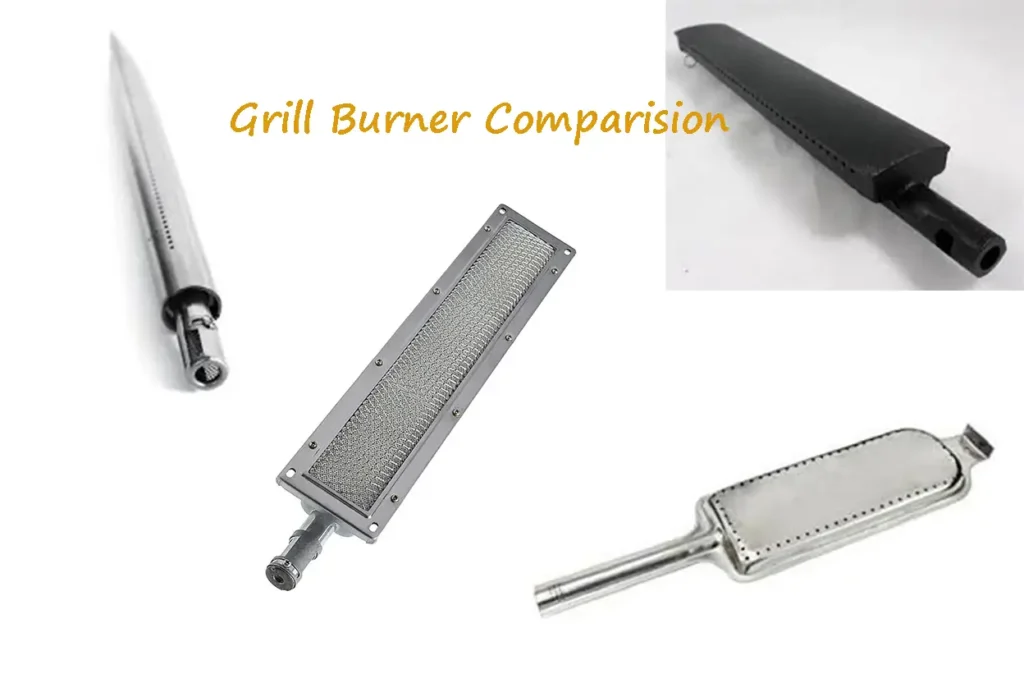
Main Types of BBQ Gas Grill Burners
1. Stainless Steel Tube Burners (Most Common in Europe)
What Is a Tube Burner?
A tube burner is a hollow stainless steel tube with evenly distributed flame ports.
Advantages
- Stable flame distribution
- Easy CE compliance
- Cost-effective
- Easy replacement and maintenance
Disadvantages
- Thinner grades may burn out faster
- Heat concentration depends on design
Best European Applications
- 2–4 burner freestanding grills
- Mid-range private label products
- Germany / France mass market
Factory Insight
Over 65% of EU orders use stainless steel tube burners due to performance-cost balance.
2. Cast Iron Burners (Heavy-Duty Performance)
What Is a Cast Iron Burner?
Cast iron burners are molded burners with thick walls and high heat retention.
Advantages
- Excellent heat stability
- Long heat retention
- Strong flame consistency
Disadvantages
- Heavy weight
- Rust risk without proper coating
- Higher logistics cost
Best European Applications
- High-end grills
- Long cooking sessions
- Buyers prioritizing performance
Cast iron burners are often chosen for premium positioning, not mass volume.
3. Stainless Steel Flat / U-Shaped Burners
Characteristics
- Wider flame surface
- Even heat coverage
- Often used in larger grills
Advantages
- Uniform cooking area
- Strong visual appeal
Disadvantages
- Higher material cost
- More complex tooling
Common in 4–6 burner grills for European retailers.
4. Infrared Gas Grill Burners (Niche Segment)
What Is an Infrared Burner?
Infrared burners use ceramic plates to radiate heat rather than direct flame contact.
Advantages
- Extremely high temperature
- Excellent searing performance
- Reduced flare-ups
Disadvantages
- Higher cost
- More complex CE testing
- Limited consumer understanding
European Market Status
Infrared burners remain a niche feature in Europe, mainly used as side burners or premium add-ons.
Burner Material Comparison (Quick Overview)
| Burner Type | Heat Stability | Cost | CE Compliance | Best Use |
|---|---|---|---|---|
| SS Tube Burner | ★★★★☆ | Low–Medium | Excellent | Mass market |
| Cast Iron Burner | ★★★★★ | Medium | Good | Premium grills |
| SS Flat Burner | ★★★★☆ | Medium–High | Good | Large grills |
| Infrared Burner | ★★★★★ | High | Complex | Premium features |
Which Burner Sells Best in Europe? (OEM Data)
Based on Longzhao Technology export records:
- 70% → Stainless steel tube burners
- 20% → Cast iron burners
- 10% → Flat or infrared configurations
The SS tube burner + cast iron cooking grate combination remains the most commercially successful.
Burner Design & CE Certification (Critical Point)
Burners directly affect:
- Flame lift-off tests
- Gas leakage tests
- Overheating protection
- Pressure regulation
⚠️ Important:
If burner material, wall thickness, or port design changes after CE testing, the CE certificate may become invalid.
This is a common mistake when working with inexperienced suppliers.
Common Buyer Mistakes When Choosing Burners
Mistake 1: Chasing High BTU Numbers
→ High BTU ≠ better cooking or CE success
Mistake 2: Mixing Burner Types Randomly
→ Inconsistent heat and testing risk
Mistake 3: Ignoring Spare Parts Availability
→ Long-term after-sales problems
How Longzhao Technology Designs Reliable Burners
We support European buyers by:
- Matching burner type to target market
- Designing burners for CE success
- Locking burner specs after testing
- Offering spare parts continuity
Our burner systems are engineered for long-term EU compliance and stable mass production.
Internal Links
- 👉 Ultimate BBQ Gas Grill Buyer’s Guide
- 👉 CE Certification Guide for BBQ Gas Grills
- 👉 Best-Selling BBQ Gas Grills in Europe
- 👉 SS304 vs SS430 vs Cast Iron Materials Guide
Contact the Manufacturer
WhatsApp: +86 13929916711
Email: manager@bbqkey.com
Website: https://www.bbqkey.com