
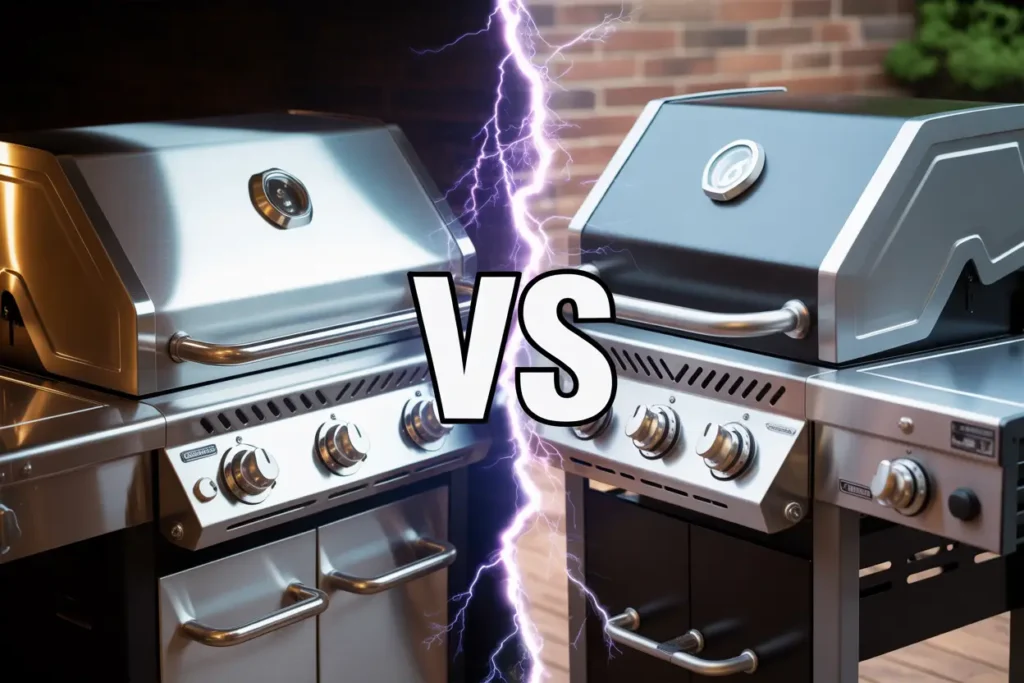
SS304 vs SS430 BBQ gas grill: Which Material is Best?
Material Comparison Guide for European Buyers & Importers
When sourcing BBQ gas grills for the European market, material selection directly affects product lifespan, retail positioning, customer satisfaction, and compliance risk.
Among all options, SS304, SS430 stainless steel, and cast iron are the three most commonly used materials. This guide provides a clear, practical comparison to help European importers and brand owners choose the right material for the right market segment.
Why Material Choice Matters in Europe
European buyers are more sensitive to:
- Rust resistance
- Long-term durability
- Coastal and humid climates
- Product appearance after years of use
- Brand reputation and warranty claims
Choosing the wrong material often leads to:
- Rust complaints
- High after-sales cost
- Negative reviews
- Brand damage
SS304 Stainless Steel BBQ Gas Grills
What Is SS304?
SS304 is a food-grade austenitic stainless steel containing higher nickel content, offering excellent corrosion resistance.
Advantages
- Excellent rust resistance
- Ideal for coastal and humid regions
- Premium appearance
- Long service life
Disadvantages
- Higher raw material cost
- Higher retail price
Best Markets in Europe
- Coastal countries
- Southern Europe
- Premium brands
- Outdoor kitchen projects
Typical OEM Positioning
- Premium built-in or high-end freestanding grills
- Long warranty programs
SS430 Stainless Steel BBQ Gas Grills
What Is SS430?
SS430 is a ferritic stainless steel with lower nickel content, widely used for cost-effective BBQ gas grills.
Advantages
- Lower cost than SS304
- Good heat resistance
- Widely accepted in mass market
- Stable supply chain
Disadvantages
- Lower corrosion resistance than SS304
- Requires surface treatment or proper maintenance
Best Markets in Europe
- Germany
- France
- Central & Eastern Europe
Typical OEM Positioning
- Best-selling mid-range grills
- High volume private label programs
Cast Iron in BBQ Gas Grills
Where Cast Iron Is Used
Cast iron is mainly used for:
- Cooking grates
- Burners (specific designs)
Rarely used for full grill bodies.
Advantages
- Excellent heat retention
- Superior searing performance
- Traditional BBQ feel
Disadvantages
- Heavy weight
- Requires coating or enamel
- Rust risk if poorly maintained
Best Applications
- Premium cooking grates
- Performance-oriented grill models
SS304 vs SS430 vs Cast Iron – Quick Comparison Table
| Material | Rust Resistance | Cost Level | Weight | Best Use |
|---|---|---|---|---|
| SS304 | ★★★★★ | High | Medium | Premium grills |
| SS430 | ★★★☆☆ | Medium | Medium | Mass market |
| Cast Iron | ★★☆☆☆ | Medium | Heavy | Cooking grates |
Which Material Sells Best in Europe? (Factory Insight)
From OEM export data:
- 70% of European orders use SS430 bodies + cast iron grates
- 20% use SS304 bodies for premium lines
- 10% focus on heavy-duty cast iron components
This combination balances cost, performance, and durability.
How Material Choice Affects CE Certification
Material selection impacts:
- Heat deformation tests
- Surface temperature safety
- Structural strength
- Long-term stability
CE testing samples must match mass production materials exactly.
Any material change after testing can invalidate CE compliance.
Common Buyer Mistakes (And How to Avoid Them)
Mistake 1: Choosing SS304 Everywhere
→ Unnecessary cost increase without market return
Mistake 2: Ignoring Climate Factors
→ Rust complaints in coastal regions
Mistake 3: Changing Materials After CE Testing
→ Legal and compliance risk
How Longzhao Technology Supports Material Selection
We help European buyers by:
- Matching material to target market
- Offering SS304 / SS430 / cast iron options
- Locking BOM after CE testing
- Providing transparent material documentation
Internal Links
- 👉 Ultimate BBQ Gas Grill Buyer’s Guide (Pillar Page)
- 👉 Best-Selling BBQ Gas Grills in Europe
- 👉 CE Certification Guide for BBQ Gas Grills
Contact the Manufacturer
WhatsApp: +86 13929916711
Email: manager@bbqkey.com
Website: https://www.bbqkey.com